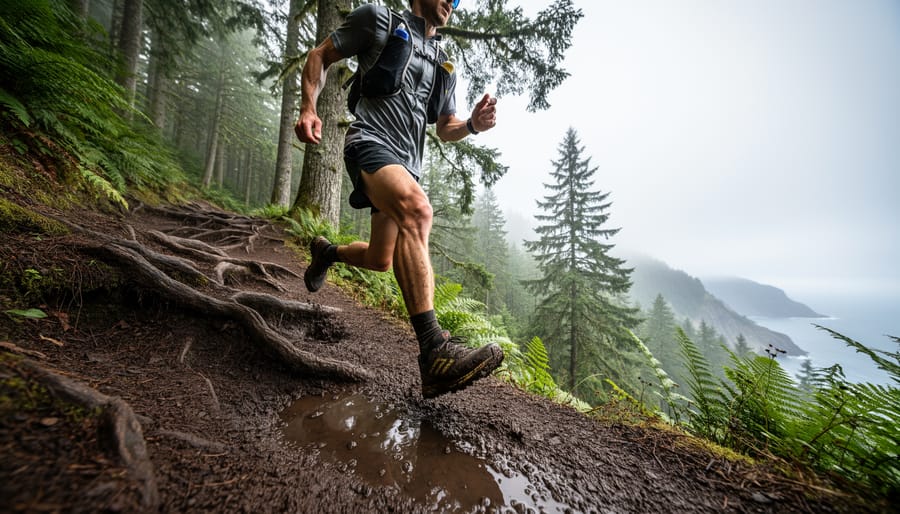
Coast mountain trail running combines the technical challenge of alpine terrain with stunning Pacific coastal views, creating one of the world’s most exhilarating running experiences. This regional style, rooted in British Columbia’s Sea-to-Sky corridor and extending through the Pacific Northwest, demands both mountain skills and trail endurance as runners navigate steep elevation gains, technical descents, and rapidly changing weather between ocean-level starts and alpine ridgelines.
What sets this niche apart is the terrain itself: routes often climb thousands of feet from coastal rainforests through subalpine meadows to exposed peaks, all within a single race. The 2026 season is packed with opportunities. Registration for signature events like the Squamish 50 opened in November 2025, while the Vedder Mountain Challenge on May 30-31, 2026 and Moose Mountain Trail Races in Bragg Creek on August 22, 2026 (offering 16KM to 50KM distances) give runners multiple chances to test themselves.
Whether you’re eyeing your first coastal peak or chasing a personal record on wet rock and root-laced trails, the community is growing fast. Races fill quickly, gear choices matter more than on typical trails, and training requires specificity. This guide walks you through what makes coast mountain trail running unique, how to prepare your body and kit, and where to find your next starting line.
What Makes Coast Mountain Trail Running Different
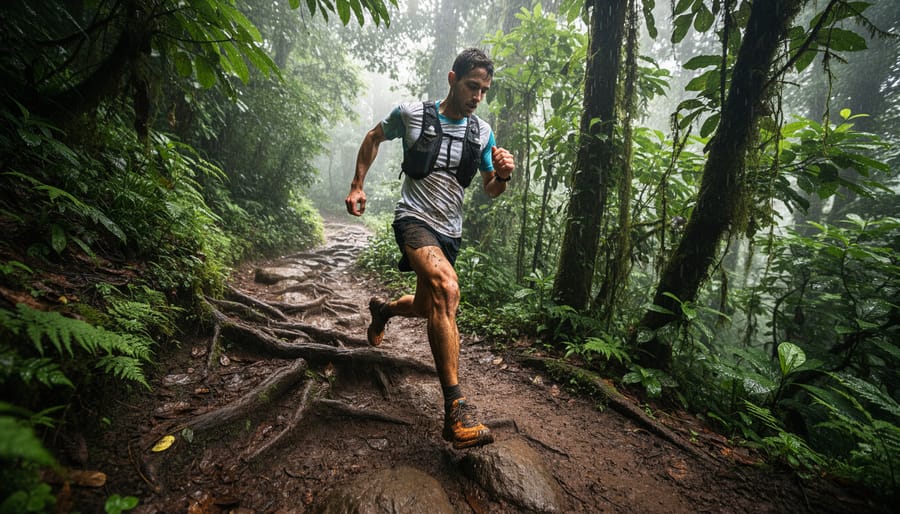
Coast mountain trail running throws you into an environment where rainforest meets alpine in a matter of miles. Runners here routinely tackle 1,000 to 3,000 feet of elevation gain per race segment, often on trails that switch from root-laced forest floors to exposed rocky ridgelines within the same climb. The technical demands are constant: slick rocks, narrow boardwalks over wetlands, loose scree on steep descents, and creek crossings that test your balance and nerve. Unlike the dry, hard-packed trails of the Southwest or the rolling singletrack of the Midwest, coast mountain routes are steep, wet, and frequently shrouded in fog or mist even in summer.
Weather swings add another layer of unpredictability. You might start a race in coastal drizzle at sea level, climb into brilliant sunshine above the tree line, then descend back into rain within two hours. Layering becomes essential, not optional. The region’s proximity to the Pacific means storms roll in fast, and morning fog can linger past noon, reducing visibility and making navigation skills critical.
What sets this style apart is the scenery earned through suffering. Cresting a ridge after a brutal climb rewards you with views of snowcapped peaks, deep fjords, and the glittering Pacific stretching to the horizon. The trails weave through old-growth cedar and hemlock forests, cross meadows thick with wildflowers in spring, and hug cliffs where eagles circle below you. It’s a uniquely Pacific Northwest blend of rugged and beautiful, demanding both physical grit and a willingness to embrace mud, rain, and unpredictable conditions as part of the experience.
Major Coast Mountain Trail Races in 2026
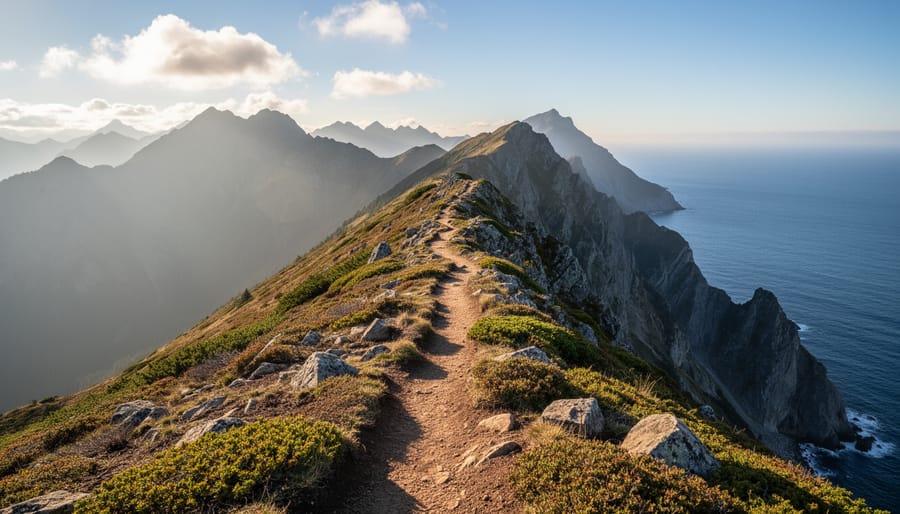
The coast mountain region hosts a vibrant calendar of events in 2026, ranging from established ultra-distance challenges to accessible weekend races that welcome runners at every level. Whether you’re eyeing your first mountain race or training for a technical ultra, the lineup offers something for everyone, and registration windows open late 2025, so planning ahead is key.
| Race Name | Date / Registration Opens | Location | Distance Options |
|---|---|---|---|
| Alpenglow 100 | Nov 7, 2025 (registration) | Coast Mountains, BC | 100-mile ultra |
| Squamish 50 | Nov 14, 2025 (registration) | Squamish, BC | 50-mile, 50K, 23K |
| Diez Vista 50K | Nov 21, 2025 (registration) | Coast Mountains, BC | 50K |
| Vedder Mountain Challenge | May 30-31, 2026 | Chilliwack, BC | Multiple distances |
| Moose Mountain Trail Races | August 22, 2026 | Bragg Creek, AB | 16K, 29K, 42K, 50K |
The Vedder Mountain Challenge kicks off the spring calendar on May 30-31, 2026, offering a weekend of racing in Chilliwack with options for various fitness levels. It’s a great early-season test that lets you gauge your mountain legs before the summer lineup.
Later in the summer, Moose Mountain Trail Races on August 22, 2026 brings the coast mountain ethos to Bragg Creek, Alberta, with four solo distances, 16K, 29K, 42K, and 50K. The event showcases the steep, technical terrain that defines this style of racing, and the range of distances makes it accessible whether you’re stepping up from shorter trails or chasing a longer challenge.
For those targeting the marquee ultra events, registration windows open in the final months of 2025. Alpenglow 100 registration opens November 7, followed by Squamish 50 on November 14, Diez Vista 50K on November 21, and the broader CMTR races series on December 5. These are popular events with competitive fields, so mark your calendar early. Many of these races fill quickly, and some offer multi-distance formats that let you choose an appropriate challenge.
If you’re exploring multiple events or want to see what other regional options exist, check out a trail running series that spans different locations and terrains. The coast mountain scene is part of a broader network of trail races across North America, and finding the right event often means comparing distances, elevation profiles, and community vibe. Platforms like Wixxy Sports aggregate these events, making it easier to browse the full calendar and register without hunting down individual race websites.
Getting Started: Training and Preparation
Building Your Base for Mountain Terrain
Start with walks or hikes on local trails that climb, even if they’re modest hills. Your goal is to teach your legs and lungs to handle sustained uphill effort without overloading your joints too soon. Add 50 to 100 metres of elevation gain each week, and don’t rush, mountain fitness builds over months, not weekends.
Downhill running demands different strength. Your quads act as brakes on steep descents, so add single-leg squats, step-downs, and eccentric leg exercises twice a week. Practice short, controlled descents on softer surfaces before tackling technical rock and root sections. If you’re coming from road running, expect your downhill legs to feel trashed after your first mountain outings, that’s normal.
Mix in back-to-back long efforts on consecutive days to simulate the fatigue you’ll face in longer races. A Saturday climb followed by a Sunday trail run teaches your body to move when it’s already tired. Some coast mountain runners incorporate a weekly cold plunge for recovery between hard sessions, though consistent sleep and fueling matter more than any single recovery tool.
Progress slowly. If your knees or calves start barking, dial back the volume and let adaptation catch up.
Gear Essentials for Coast Mountains
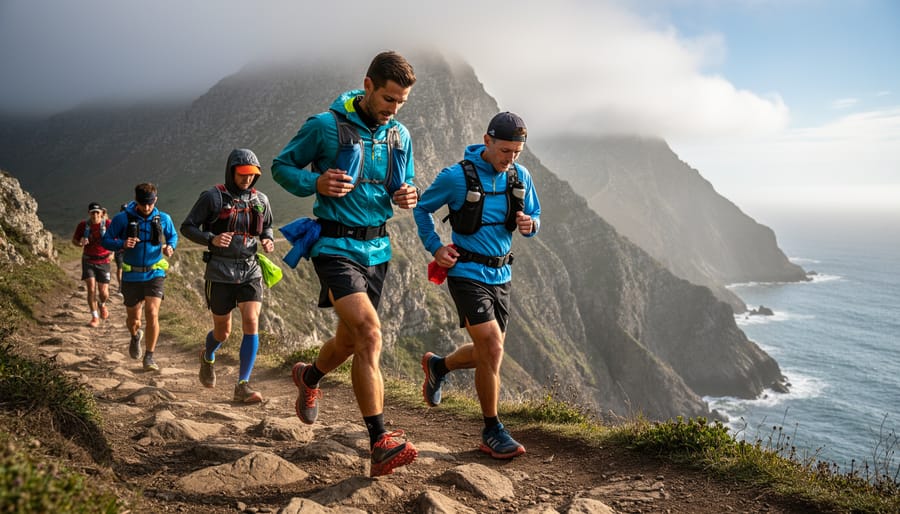
Coast mountain weather shifts fast, sun to rain, warm valleys to exposed ridges, so layering beats a single heavy jacket. Start with a moisture-wicking base, add a light insulating mid-layer, and carry a packable windproof or waterproof shell. Tights or shorts depend on preference, but many runners opt for breathable tights with pockets for energy gels and the supplement basics that keep you fueled on longer efforts.
Footwear matters on technical terrain. Trail shoes with aggressive lugs grip wet roots and rocks better than road shoes, and many coast runners add a gaiter to keep out mud and debris. A hydration vest or pack lets you carry extra layers, snacks, and a first-aid kit without bouncing, and most include space for trekking poles if you plan steep climbs.
Navigation tools, a charged phone with offline maps, a compass, and familiarity with your route, keep you safe when fog rolls in or trails fork unexpectedly. Pack a headlamp even for daytime starts; coastal canopy can turn dim fast. Self-sufficiency here isn’t paranoia, it’s standard practice for trails where help is far and conditions change hourly.
Finding Your Community and Joining Events
Coast mountain trail running thrives on community, from weekly group runs to race-day high-fives, the culture welcomes everyone from first-timers to seasoned ultrarunners. Connecting with local groups is the fastest way to learn the terrain, discover hidden trails, and find training partners who share your pace and goals.
Start by searching social media for trail running clubs in Vancouver, Squamish, North Shore, and surrounding areas. Many organize regular meetups at popular trailheads, led by experienced runners who know the routes and conditions. These groups often share beta on upcoming races, gear recommendations, and tips for navigating technical sections safely. Running with others also builds confidence, you’ll learn pacing strategies for steep climbs and develop the technical skills needed for rocky descents, all while making friends who understand the unique demands of mountain terrain.
Race series like Coast Mountain Trail Running (CMTR) foster this inclusive spirit, designing events that range from accessible distances to serious challenges. Registration for CMTR races opens December 5, 2025, giving you time to plan your 2026 race calendar. Beyond local series, the Squamish 50 (registration opens November 14, 2025) and Diez Vista 50K (opens November 21, 2025) draw runners worldwide to experience the region’s iconic trails.
Platforms like Wixxy Sports make it simple to browse coast mountain events alongside races globally, compare distances and elevation profiles, and register directly, all in one place. You can filter by location, date, and difficulty, so whether you’re chasing your first trail 10K or planning a destination ultra, you’ll find the right event.
The community extends beyond race day. Many clubs host trail maintenance days, skills clinics, and social runs that emphasize healthy running habits and injury prevention. Jump in, ask questions, and run with others, the coast mountain community shows up for each other.
Common Questions About Coast Mountain Trail Running
New to coast mountain trail running? Most questions boil down to whether you’re ready and how to start smart. The good news: this community welcomes runners of all backgrounds, and you don’t need elite fitness or mountain access to prepare effectively.
Do I need to be an experienced trail runner first?
Not necessarily. A solid base of consistent running helps, if you can comfortably handle a 10K road run or flat trail, you have enough aerobic fitness to start training for shorter coast mountain events. The real adjustment is learning to hike steep climbs without shame (everyone does it) and descend technical sections with control. Many first-timers come from road running and adapt quickly once they accept that walking uphill is part of the sport here.
How do I choose my first race?
Start with shorter distances that still give you the coast mountain experience, a 10K to half-marathon distance with 500-800m of elevation gain is a manageable introduction. Look for events that describe themselves as “beginner-friendly” or offer multiple distance options, which usually means better trail marking and more aid station support. Registration windows for 2026 coast mountain races opened between November 2025 and early December 2025, so planning ahead matters, popular events fill fast.
What weather should I prepare for?
Expect anything, often in the same run. Coastal mountains are notorious for rapid changes: you might start in fog, climb into sunshine, and finish in drizzle. Always carry a lightweight waterproof shell and an extra insulating layer, even on short races. Summer months (June through September) offer the most stable conditions, but “stable” is relative, afternoon thunderstorms and morning marine fog still happen. Spring and fall races demand more weather vigilance and gear redundancy.
Can I train for coast mountain races if I live somewhere flat?
Yes. Focus on building leg strength through hill repeats on whatever inclines you can find, stair climbing, and strength training that targets quads, glutes, and stabilizers. Treadmill incline work helps, though it won’t replicate technical footing, practice balance and ankle strength separately with agility drills or trail hiking when you travel.
What are the main safety concerns?
Getting lost on unmarked trails, twisting an ankle on technical descents, and underestimating weather exposure are the top risks. Carry navigation (phone with downloaded maps or GPS watch), tell someone your route and expected return time, and pack the essentials even on short outings, weather changes fast and small mistakes compound in remote terrain.
When should I register for races?
As soon as registration opens. Races like Squamish 50, Diez Vista 50K, and smaller coast mountain events often fill within days or weeks of their November/December registration windows. Set calendar reminders and have your race choice narrowed down beforehand.
What fitness level do I realistically need?
For a first coast mountain race of 15-25K, you should be running three to four times per week and comfortable with two-hour efforts at conversational pace. The elevation will slow you significantly, a 20K mountain race typically takes as long as a flat marathon for most runners, so endurance matters more than speed.
Most newcomers overestimate the technical challenge and underestimate the vertical effort. Your first coast mountain race will feel harder than the distance suggests, but that’s true for everyone, and the views, the community at aid stations, and the satisfaction of topping out on a ridge make it worth every grunt. If you’re still unsure whether you’re ready, join a local trail running group for a weekend outing. You’ll learn faster from experienced runners than from any online guide, and you’ll discover that coast mountain trail running is more accessible than it looks from the bottom.
Coast mountain trail running isn’t reserved for elite ultra-runners or those who live at the trailhead. It’s a welcoming, growing community where beginners tackle their first vertical kilometer alongside seasoned athletes chasing podiums. The terrain challenges you, but the people around you lift you up, at aid stations, on social media groups, and during post-race barbecues where everyone shares stories and beta.
Start small. Join a local group run, explore a nearby trail, or sign up for a shorter distance at one of 2026’s coast mountain events. Registration windows for Alpenglow 100, Squamish 50, Diez Vista 50K, and CMTR races opened in late 2025, and races like Vedder Mountain Challenge (May 30-31) and Moose Mountain Trail Races (August 22 in Bragg Creek) are already on the calendar. Whether you’re eyeing a 16K introduction or a full 50K challenge, there’s a race that fits your goals.
Ready to find your next adventure? Browse the Wixxy Sports directory to discover coast mountain trail running events, compare distances and dates, and register with confidence. Your first summit view is waiting.