

Coast mountain trail running combines the technical challenge of alpine terrain with stunning Pacific coastal views, creating one of the world’s most exhilarating running experiences. This regional style, rooted in British Columbia’s Sea-to-Sky corridor and extending through the Pacific Northwest, demands both mountain skills and trail endurance as runners navigate steep elevation gains, technical descents, and rapidly changing weather between ocean-level starts and alpine ridgelines.
What sets this niche apart is the terrain itself: routes often climb thousands of feet from coastal rainforests through subalpine meadows …
Yoga and Fitness Events
Why the Northern Super League Is Changing Women’s Soccer in Canada

The Northern Super League is Canada’s professional women’s soccer competition bringing six clubs together across the country, and right now you can catch the 2026 season in action. Running from April 24 through the championship final on November 14, this second-year league features Calgary Wild FC, Halifax Tides FC, Montreal Roses FC, Ottawa Rapid FC, AFC Toronto, and Vancouver Rise FC competing coast to coast.
Owned and operated by Project 8 Sports, the league launched its current campaign at Vancouver’s Swangard Stadium and has been building momentum as a vital platform for women’s soccer in Canada. If you…
What Are Supplement Basics for Regular Training (and How Do They Work)?

Supplement basics for regular training are the core nutritional products that support recovery, performance, and consistency for athletes training multiple times per week. These essentials include protein powders, electrolyte replacements, and targeted nutrients that fill dietary gaps created by increased physical demands.
If you’re running three mornings a week or hitting the pitch for soccer practice, your body needs more than casual exercise enthusiasts. The right supplements bridge the gap between what your training requires and what your diet delivers. They don’t replace whole foods, but they help you recover faster…
Jordyn Huitema’s ACL Comeback: What Soccer Athletes Can Learn from Her Journey

Canadian international Jordyn Huitema is currently sidelined with a season-ending ACL injury after tearing her left knee ligament while playing for Chicago Stars FC against Angel City FC on July 18, 2026. The setback comes just months into her tenure with the Stars, who acquired her from Seattle Reign FC in a high-profile trade worth $300,000 plus $200,000 in allocation money ahead of the 2026 NWSL season. The injury also jeopardizes her availability for Canada’s November 2026 Concacaf W Championship campaign, marking a significant blow to both club and country.
For soccer players at every level, Huitema’s journey offers…
What Is Institute Athletic Medicine (and How Does It Support Athletes)?
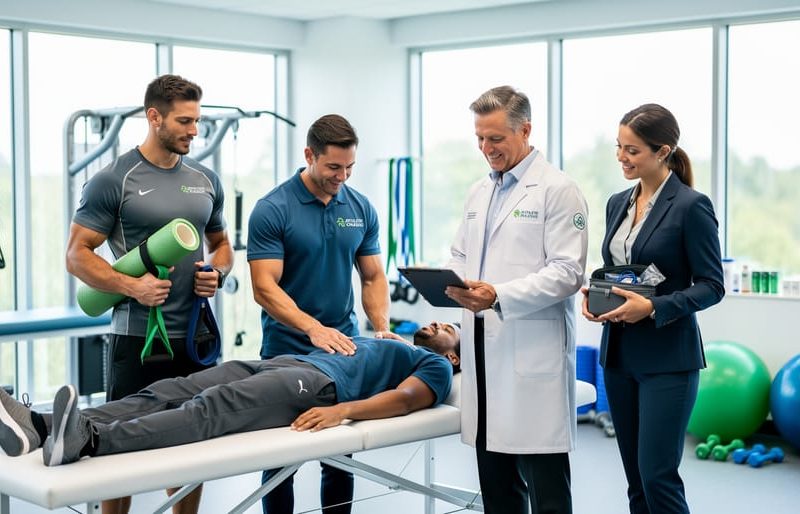
An institute of athletic medicine is a specialized healthcare facility designed to prevent, diagnose, treat, and rehabilitate sports-related injuries and conditions for athletes at every level. Unlike your regular doctor’s office or walk-in clinic, these centers bring together multidisciplinary teams of orthopedic surgeons, sports medicine physicians, physical therapists, athletic trainers, and nutritionists under one roof, all focused on getting you back to the activities you love as quickly and safely as possible.
Whether you’re training for your first 5K, playing weekend soccer with friends, or competing at an elite …
How to Map Out Training for Your First Marathon in 7 Steps

Mapping out training for your first marathon takes 16 to 20 weeks following a structured plan that builds your base, increases weekly mileage gradually, and balances long runs with recovery. You’ll typically run four days per week, starting with manageable distances like 6 miles for your first long run and progressively building endurance until you’re ready to cover 26.2 miles on race day.
The good news? You don’t need to reinvent the wheel. Proven programs from Hal Higdon, Runner’s World, and Nike provide ready-made frameworks that remove the guesswork and keep you injury-free while building the stamina you …
How to Train for a Half Marathon in 8 Weeks (Step-by-Step Plan)

You can prepare for a half marathon in just 8 weeks if you’re already running 3 to 5 miles comfortably and logging at least 9 miles per week. This compressed timeline trades the traditional 12-week buildup for a focused, high-efficiency approach built around two 3-week training cycles, two weeks of light taper training, and four running days per week. The plan works because it assumes you’ve already built a base fitness level, meaning you’re not starting from scratch but accelerating your race readiness through strategic mileage increases, targeted speed work, and structured recovery.
Eight weeks is tight, but …
5 Peaks Trail Running Series: What It Is and Where to Run in 2026

The 5 Peaks Trail Running Series is Canada’s premier off-road running event, bringing trail runners of all abilities to some of the country’s most stunning natural settings for races throughout the spring and summer. For 2026, confirmed events include the Alice Lake race in Squamish, BC on April 4th, the Kelso race on May 2nd, and the Area 8 Conservation race in Milton, Ontario on July 18th. Organized regionally by 5 Peaks BC and 5 Peaks Ontario, these races offer accessible trail running experiences on courses typically ranging from 5K to 10K distances, with the Area 8 event featuring an 8.1 km course.
What makes this …
How to Train for a Half Marathon in 12 Weeks: A Complete Week-by-Week Plan

You can prepare for a half marathon in exactly 12 weeks using a structured training plan that combines endurance runs, speedwork, and recovery days to safely build your mileage from wherever you are today to race-ready fitness. This isn’t about cramming months of training into a rushed timeline. Twelve weeks gives you the perfect window to build a solid foundation, develop speed, and arrive at the start line confident and injury-free.
The plan works in three clear phases. The first four weeks prioritize consistency over speed, helping you establish a regular running habit with easy mileage, a mix of short runs during the week…
How to Follow a 1/2 Marathon Training Plan for 12 Weeks

You can train for a half marathon in exactly 12 weeks by combining three types of runs each week: long endurance runs that build to 10-12 miles, speed or tempo sessions that sharpen your pace, and recovery runs that let your body adapt. This training window gives you enough time to safely build mileage, develop stamina, and cross the finish line strong without rushing the process or risking injury.
Key Takeaway: A 12-week half marathon plan balances endurance runs, speed work, and recovery days across a flexible weekly structure that adapts to your schedule. Most runners train 3-5 days per …