

A 24 week marathon training plan gives you six months to build from comfortable running to 26.2 miles, and that longer runway is exactly why it works. You get more time to add distance gradually, more room for the odd missed session, and a lot less pressure on your legs, lungs, and motivation. Think of it as a gentler ramp to race day.
Here’s what a plan like this looks like in practice. You’ll run four days a week on a simple schedule, or up to six if you’re feeling ambitious, with a track workout every Tuesday to build speed and rhythm. Rest days aren’t empty: core and stretch sessions keep you strong and loose. Around Week 14, a tune-up half marathon lets you test your fitness and race-day routine. The long run builds toward a 22-mile peak, which means the marathon itself won’t feel like a leap into the unknown.
This guide walks you through the tools you’ll need, the safety basics, and a step-by-step path from your first week to the finish line. Beginners and seasoned runners are all welcome here. Grab your shoes, find your people in our global events directory, and let’s get you to that start line.
Why a 24 Week Marathon Training Plan Is Having a Moment
Here’s the thing about 24 weeks: it gives you room to breathe. Nearly six months means you can build up gradually, ease into the work, and still have a life. Work gets busy, family plans pop up, and a rough week doesn’t wreck everything. If you’ve been curious about a 6-month marathon plan this is the same friendly, steady idea.
That longer runway is exactly why so many runners are leaning toward it. Well-known names offer 24-week plans, including a PDF version tailored by London Marathon winner Mike Gratton. Having a plan shaped by someone who’s actually won a major marathon is a pretty great place to start.
Of course, it’s not the only route. If you want something more compressed and high-volume, a 20-week advanced plan packs in six runs a week. That’s a bigger weekly commitment, and it suits runners who already feel confident with that kind of load.
So who is the 24-week option for? Anyone who wants flexibility. First-timers, returning runners and busy people can all find a rhythm here. You don’t need to rush, and you don’t need to be a speed demon. You just need to show up, week after week, and let the miles add up.
What You Need Before Week 1: Gear, Tools and Support
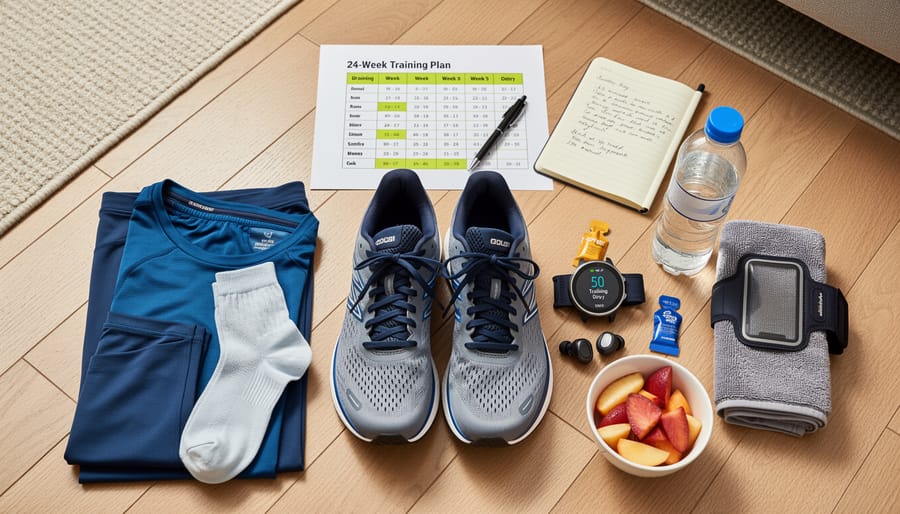
Before you lace up for Week 1, let’s get your toolkit sorted. The good news? You don’t need fancy equipment to start a 24 week marathon training plan. You need a handful of solid basics and the right people around you.
Start with a plan you trust. Whether it’s a printed schedule on the fridge or a PDF on your phone, pick one and commit to it. A 24 week plan tailored by London Marathon winner Mike Gratton is available as a PDF, which is easy to save and revisit. Having your weeks mapped out takes the guesswork off every run.
Next, think about what you’ll carry and wear. Here’s a simple checklist to work from:
- Well-fitting running shoes that feel comfortable from the first step.
- Weather-appropriate clothing for hot, cold and rainy days.
- A watch or phone to track your time on each run.
- Water and fuel you’ve practiced with on longer runs.
- A calendar or training log to tick off every session.
- Access to a track for your workout days.
- A running buddy or local club to share the miles.
That track access matters because some plans build in a track workout every Tuesday, so it helps to know where yours is before the first week starts.
Don’t underestimate the community side, either. Training is easier (and a lot more fun) when someone’s waiting for you at the corner at sunrise. Running buddies keep you honest on tough mornings, and local clubs and group runs bring in new routes, advice and friendly faces.
Ready to find your crew? Browse running clubs and events in the Wixxy Sports global directory and connect with runners near you.
Safety First: Warning Signs and When to Hit Pause

A 24 week plan gives you room to be smart, so use it. Before Week 1, check in with a doctor if you have any health concerns. It’s a quick step that lets you start with confidence.
Build up gradually, and don’t try to bank extra miles early. If you’re still learning how to map your first marathon remember that the steady approach is the one that gets you to the start line healthy.
A few habits make every run safer:
– Drink water regularly, especially on longer runs.
– Run where drivers and other runners can see you, with bright or reflective gear and a clear route.
– Tell someone your route when you head out solo, or better yet, grab a running buddy.
– Get your fueling sorted, and brush up on running nutrition basics so your long runs feel strong.
Your body gives you useful feedback, so listen to it. Pause and check in if you notice sharp or lingering pain, dizziness, chest discomfort, or if you’re coming down with an illness.
Adjusting a week isn’t failing. It’s what smart runners do, and with this much time on the calendar, one lighter week won’t derail your marathon dream.
Your Step-by-Step Path Through the 24 Week Marathon Training Plan
Choose Your Weekly Rhythm: Four Days or Six
Not every runner needs the same weekly rhythm, and that’s the beauty of a 24 week plan. You’ve got room to choose what fits your life.
The simplest option has you running four days a week. That’s a friendly starting point if you’re new to marathon training, returning after a break, or juggling work, family and everything else. Fewer running days means more space to recover, and it makes showing up consistently feel doable.
If you’ve got more experience and want a bigger challenge, there’s the other end of the spectrum. A 20-week advanced plan packs in six runs a week. That’s a real commitment, so it suits runners who already handle regular training comfortably and can protect their sleep and recovery.
One feature to look for: some plan structures include a track workout every Tuesday. It gives your week a steady anchor and a regular session to build around, so check whether your chosen plan has it and whether you can get to a track.
Be honest about your schedule and your current fitness, then pick the rhythm you can keep up for months. Steady beats heroic every time.
Make Rest Days Count: Recovery, Core and Stretch Sessions
Rest days aren’t a pause button on your training. They’re where your body does the building. Every long run and Tuesday track session leaves tiny stresses in your muscles, and recovery is when you come back stronger from them. Skip it, and you’re just piling up fatigue.
The good news? Rest days in a simple plan don’t have to mean doing nothing. Many plans use core and stretch sessions on those days, which keeps you moving, loosens tight legs and builds the steady strength that helps you hold your form late in a long run.
Keep these sessions short, gentle and easy. You should finish feeling better than when you started, not wiped out. If your legs feel heavy or something niggles, take the day fully off and let your body catch up. That’s smart training, not slacking. Treat rest days as appointments you keep, just like your runs.
Build Your Long Run Toward the Peak
Your long run is the heart of the plan, and the idea behind it is simple: go a little farther over time, never a lot farther all at once. Early long runs should feel comfortable, then stretch gradually as your legs, lungs and confidence catch up. With 24 weeks to work with, you’ve got plenty of room to build patiently instead of rushing.
The payoff is real. One plan peaks with a 22-mile long run, which means you arrive on race day having already covered most of the marathon distance. That kind of experience turns the unknown into something familiar.
Keep the pace easy and conversational. If you can chat with a running buddy, you’re in the right zone. Use these runs to rehearse everything you’ll do on marathon morning: sip water, test your fuel, wear your race shoes and clothes. Find what sits well in your stomach now so there are no surprises later.
Follow the long-run progression in your chosen plan, and trust the build.
Test Your Legs With a Tune-Up Half Marathon
Week 14 is your moment to find out how race day will actually feel. One plan structure builds in a tune-up half marathon right here, and it’s a smart way to rehearse everything you’ll do on marathon morning, without the full 26.2 miles on the line.
Treat it as a dress rehearsal. Wear the shoes and kit you plan to race in, eat the breakfast you’ve practiced, and try your fueling and hydration strategy at a real aid station. Start easy, settle into a pace you could hold for much longer, and notice how your legs respond as the miles add up. You’ll also get a feel for the buzz of a crowded start line, which is half the fun.
Ready to pick yours? Browse half marathons around the world in the Wixxy Sports global directory, find one that lands near Week 14, and sign up through easy online registration. Grab a training buddy while you’re at it, because race day is better together.
Taper and Get Race-Ready
You’ve done the hard work, so the taper is where you let it pay off. Easing off before race day means your legs arrive fresh instead of tired, and that matters more than squeezing in one last big run. Follow the taper built into your chosen plan rather than inventing your own, and trust it even when the shorter weeks feel strange.
Use this stretch for the little things. Lay out your race kit early and wear everything you plan to run in at least once beforehand. Check your shoes, pin your bib, and sort out your fuel and hydration. Map your travel, parking and start time so race morning feels calm. Mentally, picture the early miles going smoothly and remind yourself how many weeks of steady effort sit behind you. Nerves are normal, and they’re a sign you care.
24 Week Marathon Plan Key Details at a Glance

Here’s your quick-reference snapshot of the 24 week marathon training plan, built only from what we can verify:
– Plan length: 24 weeks is the gentle, flexible build. A 20-week advanced option also exists for runners who want a more compressed route.
– Runs per week: A simple plan has you running four days a week. The 20-week advanced plan packs in six runs a week.
– Tuesday track workouts: One plan structure puts a track workout on the calendar every Tuesday.
– Week 14 tune-up: That same structure includes a tune-up half marathon in Week 14, a perfect rehearsal for race-day routines.
– Peak long run: The plan builds to a 22-mile peak long run.
– Rest days: A simple plan fills rest days with core and stretch sessions, so recovery still counts.
– Mike Gratton PDF: There’s a 24 week marathon training plan PDF tailored by London Marathon winner Mike Gratton.
One important note: exact weekly mileage and taper details vary from plan to plan. Once you’ve picked your plan, check its own schedule and follow the numbers it gives you. Keep this snapshot handy as your big-picture guide, then let your chosen plan fill in the weekly specifics.
How to Check You’re On Track and What to Do Next
Wondering if your training is actually working? Check in with yourself every few weeks using a few simple signs. You’re likely on track if you’re completing most of your weekly schedule, feeling a little stronger on each long run, recovering well between sessions, and handling the Week 14 tune-up half marathon comfortably. Reaching your peak long run, which is 22 miles in one plan, is the big milestone to aim for.
Missed a week? It happens to everyone, and it doesn’t ruin anything. Pick up where the plan is now rather than cramming in the runs you skipped. Squeezing in extra miles to catch up is a fast track to tired legs and injury, so let the missed week go and move forward with confidence.
Once you’re feeling good, start lining up your next steps. Browse marathons in the Wixxy Sports global directory and register online for the race that fires you up. Then find a local running group, because training is easier and way more fun with friends beside you. And don’t keep your progress to yourself. Share your journey with the community, whether it’s a tough long run or a tune-up half you crushed. Your story might be the push someone else needs to lace up.
24 Week Marathon Training Plan: Your Questions Answered
Is 24 weeks too long for a marathon plan?
Not at all! It just gives you a gentler runway, with more room to build gradually, rest well and fit training around real life. If you want something shorter, our 12-week training plan guide is a good place to start.
Can beginners follow a 24 week plan?
Absolutely. A simple plan has you running just four days a week, and the extra weeks give you time to settle in without rushing.
What happens on rest days?
Rest days are part of the plan, not a break from it. A simple plan fills them with core and stretch sessions to keep you strong and loose.
How long should my longest run be?
One plan builds toward a 22-mile peak long run. Build up slowly, keep the pace easy and conversational, and follow the progression in whichever plan you choose.
Do I need a tune-up race?
It’s not a must, but it’s a great idea! One plan includes a tune-up half marathon in Week 14, which lets you practice pacing, fueling and race-day routines.
Still wondering about something else? Check your chosen plan for the details, then lace up and keep moving. Missing a week happens to everyone, so just pick back up where you left off and carry on.
You’ve got this. Twenty-four weeks gives you room to build slowly, rest smartly and arrive at the start line feeling ready instead of rushed. Four runs a week, a track workout on Tuesdays, core and stretch sessions on rest days, a tune-up half marathon in Week 14 and a 22-mile peak long run: every piece has a job, and every one is doable when you take it a week at a time.
Miss a day? Pick back up. Feeling sore? Rest is part of the plan. The finish line cares about consistency, not perfection.
Now it’s time to turn the plan into a date on the calendar. Browse marathons, half marathons and running clubs from around the world in the Wixxy Sports directory, find the race that makes your heart race a little faster, and register online in just a few clicks. Then grab a friend, a neighbor or a new running buddy and bring them along. Training is better together, and race day is even better.
Lace up, sign up and let’s go. Your 26.2 starts now.