

Aitana Bonmatí transforms admiration into action. The Barcelona midfielder and Ballon d’Or winner doesn’t just inspire fans to watch better soccer, she shows everyday players exactly how elite technique, spatial awareness, and team play translate to their own game. Her signature moves, decision-making patterns, and relentless work ethic offer a blueprint for improving at any level, whether you’re training at a local club or organizing pickup matches in your neighborhood.
What sets Bonmatí apart isn’t just her trophy cabinet. It’s how her playing style breaks down into teachable skills: one-touch passing under pressure, scanning the field before receiving the ball, and creating space through intelligent movement rather than pure speed. These fundamentals work on any pitch, at any age.
For community-focused players, Bonmatí’s career demonstrates something powerful: excellence grows through collective effort. She credits Barcelona’s training environment and teammate chemistry for her development, a reminder that the best place to improve is alongside others who share your passion for the game.
This guide connects Bonmatí’s professional techniques to practical drills, community training opportunities, and the grassroots soccer culture that builds better players everywhere. You’ll discover how to adopt her approach to vision and positioning, find local sessions that emphasize these skills, and turn individual inspiration into team improvement. The path from watching world-class soccer to playing smarter yourself starts with understanding what makes players like Bonmatí exceptional, and then stepping onto the field to practice it.
The Bonmatí Skillset: What Makes Her Special

Watch Aitana Bonmatí for five minutes and you’ll see a player who rarely wastes a touch. Her game isn’t built on flashy tricks or blistering speed, it’s constructed from intelligent decisions, ruthless efficiency, and a sixth sense for where space will open before it actually does. That combination has made her indispensable for Barcelona and Spain, but the foundation of her effectiveness is surprisingly teachable.
Bonmatí’s defining trait is spatial awareness. She constantly scans the field, head on a swivel, which lets her receive passes already knowing her next move. This isn’t superhuman talent; it’s a habit anyone can develop through deliberate practice. When she drops deep to collect the ball, she’s already mapped where teammates are running and which passing lanes defenders have left unguarded.
Her technical precision stands out most in tight spaces. Bonmatí’s first touch consistently sets her up for the next action, whether that’s a sharp turn, a quick pass, or a surge forward. She keeps the ball close, uses both feet comfortably, and rarely takes more touches than necessary. These fundamentals work at every level because they’re about control and economy of movement, not physical gifts.
What separates her tactically is positioning intelligence. She doesn’t chase the ball; she arrives where it needs to go. That sense of timing, knowing when to show for a pass, when to make a third-man run, when to hold and recycle, comes from reading patterns in how teams defend and attack. You can study those patterns in your own matches.
The skills that make Bonmatí elite aren’t locked behind professional athleticism:
- Constant visual scanning to track teammates, opponents, and open space
- Controlled first touch that sets up the next play instantly
- Two-footed competence for receiving and distributing under pressure
- Positional discipline that creates passing options without crowding
- Decision-making speed rooted in anticipation rather than reaction
These principles scale down beautifully. Whether you’re playing five-a-side on a municipal pitch or competing in an amateur league, the player who sees faster, controls cleaner, and positions smarter has a genuine advantage. Bonmatí’s game proves that soccer intelligence beats raw athleticism more often than most players realize.
Skills You Can Take to Your Local Pitch
Vision and Awareness Drills
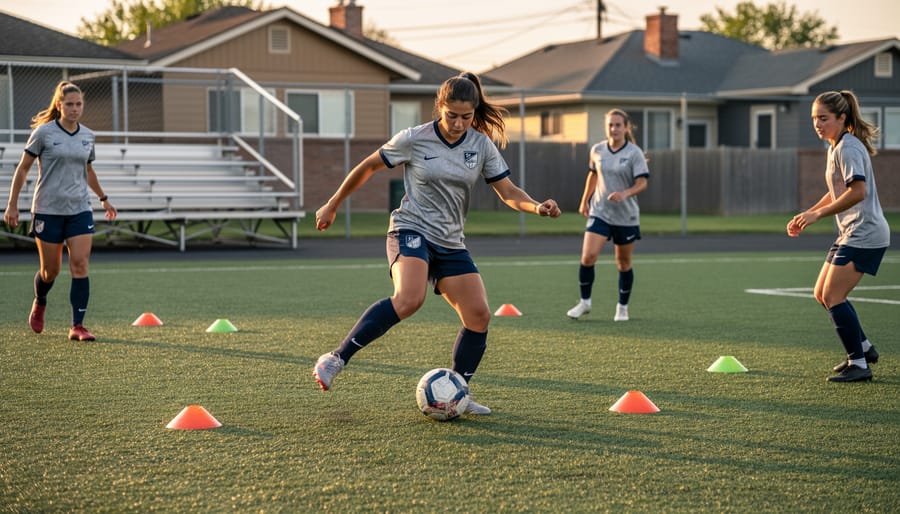
Start with rondo possession drills, small-sided circles where you must track the ball, anticipate passes, and decide when to press before the ball arrives. Bonmatí excels because she processes what’s happening two moves ahead. Set up 4v2 or 5v2 grids and force yourself to scan constantly: check your shoulder every few seconds, noting where teammates and opponents are positioned even when you’re not directly involved in play.
Practice shadow defending during pickup games. Position yourself between passing lanes rather than chasing the ball, forcing opponents to make the pass you want them to make. This demands constant recalibration as players move, exactly what Bonmatí does to control midfield space.
Try decision-making circuits focused on training for better decisions under pressure. Receive a pass, identify three options in one second, execute the highest-value choice. Repeat until scanning becomes automatic. You can run this alone against a wall or with two partners rotating roles.
Record yourself playing if possible, then watch how often you look away from the ball. Elite awareness isn’t mystical talent, it’s a trained habit anyone can develop through deliberate repetition.
First-Touch Fundamentals
Bonmatí’s first touch is surgical. Watch her receive a pass under pressure and the ball seems magnetized to her foot, settling instantly into exactly the space she needs for her next move. That precision comes from thousands of repetitions, and you can build the same foundation.
Start with wall passes. Stand three feet from a solid wall and pass the ball against it with your instep, controlling the rebound with one touch. Focus on cushioning the ball so it stops within six inches of your foot. As this becomes comfortable, increase the distance and vary the angle of your passes. The wall never gets tired, making it perfect for solo training.
For small-group work, try the triangle drill on any available space, even a section of youth soccer field dimensions works perfectly. Three players form a triangle about ten yards apart, passing in sequence while the receiver must control and redirect in one smooth motion. The key is receiving across your body to open up the next passing lane, exactly how Bonmatí operates in tight midfield spaces.
Progress to the four-cone square. Place cones in a square pattern, five yards apart. Move around the square, passing to yourself off each cone and controlling with alternating feet. This builds the directional control Bonmatí uses to evade defenders.
The real secret is intent. Each touch should have a purpose, setting up your next move, protecting the ball, or creating space. Practice 15 minutes daily and your first touch transforms from a hope into a weapon.
Where to Play and Improve
Improving your game isn’t just about solo practice, it’s about finding the right environments and people to push you forward. Whether you’re looking for competitive leagues, casual pickup sessions, or structured training, opportunities exist at every level.
Start with local soccer leagues and clubs. Most cities and towns have recreational, competitive, and co-ed leagues organized by skill level and age group. Check with your local parks and recreation department, community sports centers, and independent soccer organizations. Many areas also host drop-in pickup games at public fields, these informal sessions are perfect for trying new techniques in live play without pressure.
For more structured skill development, look into training camps and clinics in your region. These programs often run year-round and cater to various skill levels, from beginners to advanced players seeking tactical refinement. Some focus on position-specific skills while others emphasize holistic game understanding.
Online directories and community platforms make it easier than ever to get involved locally. These resources help you discover leagues, tournaments, training sessions, and pickup games near you, complete with schedules, skill levels, and contact information. They also connect you with other players looking for training partners or small-sided games.
Don’t overlook indoor facilities during colder months or rainy seasons. Futsal courts and indoor soccer centers provide year-round playing opportunities and help develop quick decision-making in tight spaces.
The key is consistency. Finding a regular playing environment, whether it’s a Tuesday night league or weekend pickup games, gives you the repetition needed to internalize the skills you’re practicing. Soccer improves fastest when you’re actively playing, not just training alone.
Watching to Learn: How to Study Elite Play
Turning on a Barcelona match or tuning in to Spain’s national team isn’t just entertainment when you’re looking to improve. Watching Bonmatí and other elite players becomes a masterclass if you know what to focus on. Most casual viewers see the final pass or goal, but active learners break down the 10 seconds of positioning and decision-making that made it possible.
Start by watching without the ball. Pick one midfielder, Bonmatí works perfectly for this, and follow only her movement for five-minute stretches. Notice where she positions herself when her team has possession versus when they’re defending. Watch how she creates passing angles by taking two steps while her teammate controls the ball. You’ll spot patterns: the subtle shift before receiving a pass, the shoulder check to scan defenders, the way she opens her hips to receive on the back foot.
- Watch a 10-minute segment with sound off, focusing only on one player’s positioning and movement.
- Rewatch the same segment, this time noting when and why they choose to pass, dribble, or hold the ball.
- Identify one specific decision or technique you saw, then pause and visualize yourself executing it.
- Write down two observations you can practice in your next training session or pickup game.
Many soccer fan communities now discuss matches with this analytical lens, sharing what they’ve learned from watching specific players. Slow-motion replays reveal the micro-adjustments elite players make, how Bonmatí’s first touch directs the ball into space rather than just stopping it, or how she disguises passes by looking one direction while playing another.
Record short clips on your phone when you spot something useful. Before your next match, review these moments and try replicating one element. Elite play stops being distant magic and becomes a library of techniques you can borrow, adapt, and make your own.
Join the Global Soccer Community
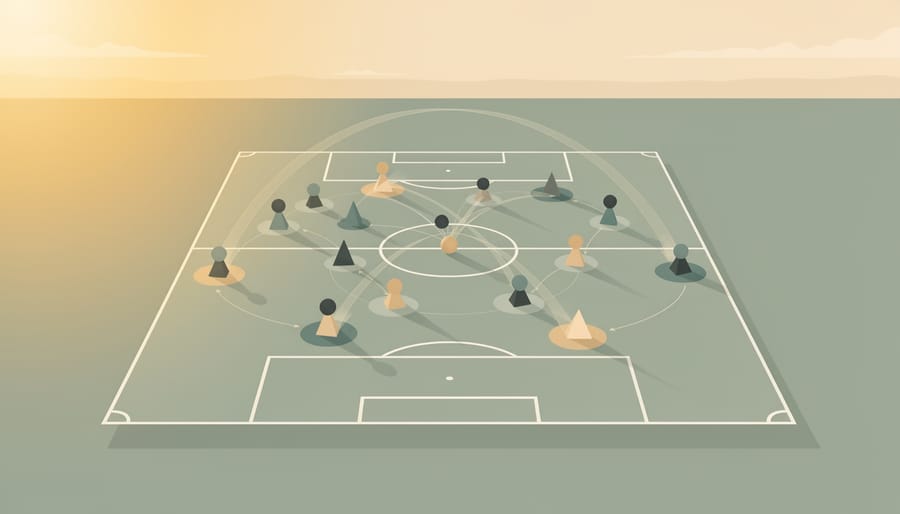
Soccer thrives because it connects people across every boundary. You can learn from Bonmatí’s technique alone in your backyard, but the real magic happens when you step into the broader community. Joining a local club or league transforms isolated practice into shared progress. You’ll find training partners who push you, teammates who cover your mistakes, and opponents who expose the gaps in your game.
Look beyond just playing matches. Volunteer to coach a youth team and you’ll solidify your own understanding of positioning and tactics. Organize pickup games in your neighborhood and you’ll build a network of players at your level. Participate in tournaments, even small local ones, and you’ll experience the competitive intensity that sharpens decision-making under pressure.
Many players discover opportunities through community sports directories that connect enthusiasts with clubs, leagues, and events in their area. These platforms help you find everything from casual kickabouts to structured training programs. If you’re managing the physical demands of regular play, resources on athletic therapy can keep you healthy and on the pitch.
The global soccer community isn’t just professional stadiums and elite academies. It’s the Sunday league in your town, the summer tournament at the local park, the coaching clinic run by volunteers. Finding your place in that community turns admiration for players like Bonmatí into tangible improvement and lasting friendships built around the beautiful game.
Aitana Bonmatí shows us that world-class soccer isn’t just about talent, it’s about smart practice, tactical thinking, and relentless improvement. The techniques she’s refined through years of training aren’t locked away at elite academies. They’re skills you can develop on any pitch, in any community, at any level.
The real question isn’t whether you can play like Bonmatí. It’s whether you’re ready to train with purpose, study the game with intention, and connect with other players who share your commitment to getting better.
Your local soccer community is waiting. Search for leagues, pickup games, training sessions, and tournaments happening near you right now. Find a group that matches your skill level and goals. Show up consistently. Practice those first-touch drills. Work on your field awareness. Watch matches not just as entertainment but as education.
Soccer becomes transformative when you move from watching greatness to actively pursuing it. Bonmatí didn’t reach the top of the sport by accident, and you don’t have to improve by accident either. Get on the pitch, find your community, and start building the game you want to play.